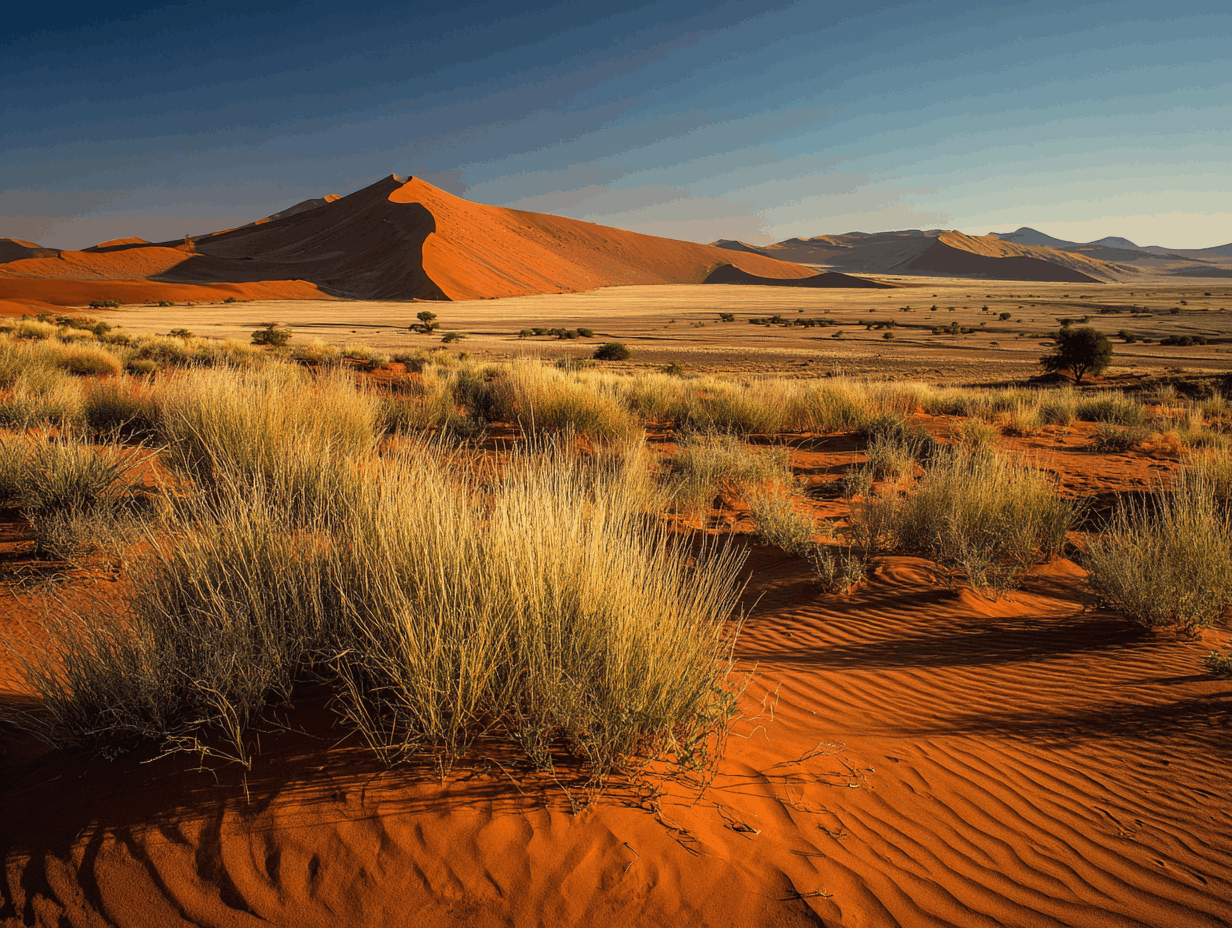
Namibia is a dream destination for those who love vast open spaces, red dunes and incredible wildlife. From the famous Etosha National Park to remote areas like the Skeleton Coast, Damaraland and the Namib Desert, getting to these places needs careful planning due to long distances and limited infrastructure.
How to get there
The main international gateway is Hosea Kutako International Airport (WDH) near Windhoek, the capital. Most visitors fly into Windhoek first. From there you can fly on small domestic planes to regional airports like Swakopmund, Walvis Bay or Ondangwa depending on your destination.
For Etosha National Park many people fly to Windhoek and then drive north (about 4-5 hours) or take a shuttle or organized transfer. To reach more remote areas such as Damaraland or the Skeleton Coast, a combination of flight and 4x4 overland travel is often necessary. Self-drive is very popular in Namibia because the main roads are good gravel but you need a proper vehicle for remote tracks. Many travelers rent 4x4 vehicles with roof tents or stay at lodges that arrange all transfers.
Smaller airstrips serve luxury camps in remote areas and flying between them saves a lot of time. However these flights are weather dependent and can be affected by strong winds or dust storms.
What to do if weather cancels the trip
Namibia has mostly dry weather but sudden storms, strong winds and fog on the coast can cause flight delays or cancellations especially on small aircraft. If your domestic flight is cancelled contact the airline or pilot straight away. Operators in Namibia are used to these conditions and will usually rebook you on the next available flight as soon as the weather improves.
In low-infrastructure regions it is essential to build in at least 2-3 extra buffer days. This extra time makes a huge difference when plans change. If you are on a self-drive trip and heavy rain makes some roads impassable, stay flexible and use the time to explore closer areas or relax at your lodge.
While waiting you can visit local markets in Windhoek, enjoy game drives in areas that remain accessible or simply rest and enjoy the dramatic desert scenery. Lodges and tour operators are generally understanding and will try to adjust your itinerary when delays happen.
Good travel insurance that covers flight delays and remote area disruptions is highly recommended. Always carry extra water, snacks and a charged power bank because services can be limited once you leave the main towns.
Reaching Namibia’s remote wildlife areas takes some effort but the reward is worth it. The feeling of having an endless landscape almost to yourself with lions, elephants or desert-adapted wildlife makes every small travel challenge fade away. Plan with enough buffer time, stay patient and embrace the wild spirit of this unique country.